
Tired of hiding your yellow teeth?
If you’re looking for safe, effective ways to brighten your smile, we’ve got you covered.
From professional treatments to snap-on veneers, we’re breaking down proven methods to eliminate yellow stains without damaging your enamel.
Say goodbye to harmful hacks and hello to a safer, whiter smile with expert tips that work.
- Snap-on veneers provide an instant fix for yellow teeth without dental visits.
- Many viral whitening hacks can cause lasting enamel damage—avoid them.
- Whitening toothpaste and strips work, but results take time and commitment.
- Natural remedies like lemon juice and baking soda can harm your teeth permanently.
Effective Ways to Whiten Your Teeth
There are plenty of viral hacks on how to get rid of yellow teeth overnight. However, they’re not recommended by the American Dental Association.
Some of them don’t get rid of yellow teeth at all and can cause you more harm than good.
Here are some safe, effective, and proven methods for teeth-whitening:
1. Snap-On Veneers
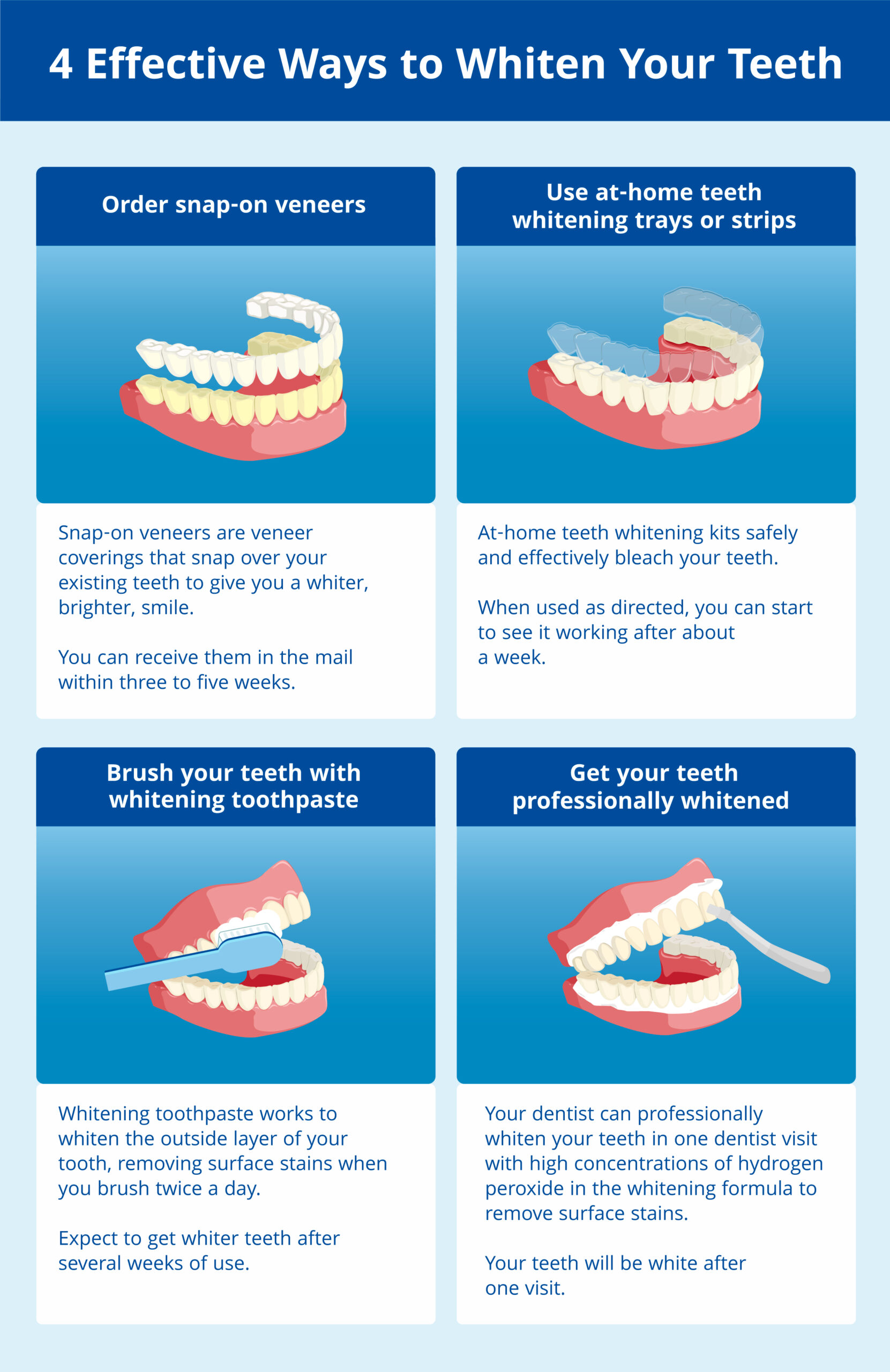
You can order snap-on veneers for a new and improved smile without going through any dental pain or dentist appointments.
The veneers cover your teeth and give you the appearance of a whiter, brighter smile. They also address other aesthetic issues, like crooked or chipped teeth.
Our snap-on veneers cost $570 for upper and lower arches and should last you up to five years.
How It Works
Snap-on veneers clip over your teeth so you have a perfect white smile.
Order the impression kit, take the impressions, send the impression kit back, and within three to five weeks, you can have a new smile.
How Soon Will It Whiten Your Teeth?
As soon as you receive the snap-on veneers in the mail — in three to five weeks with normal shipping and two with expedited shipping.
This is one of the best ways to whiten your teeth at home.
Are You Tired of Stubborn Yellow Teeth?
Get an instant white smile with our snap-on veneers.
SHOP NOW
2. At-Home Teeth Whitening Trays or Strips
At-home teeth whitening strips or trays can be effective at removing extrinsic stains. Most of the products contain hydrogen peroxide which naturally bleaches the teeth.
You don’t need to visit a dentist’s office to try this method. Many at-home whitening products are available over the counter.
How It Works
The hydrogen peroxide breaks down the stain molecules, like those caused by coffee or wine, and bleaches it to white.
How Soon Will It Whiten Your Teeth?
You will see visible results after about a week of daily use.
3. Brush Your Teeth With Whitening Toothpaste
If you’re wondering how to make yellow teeth white, whitening toothpaste does work if you have extrinsic stains. It targets yellowing or discoloration on the outside layer of the tooth.
Whitening toothpaste works to remove surface stains that regular, non-whitening toothpaste can’t.
How To Use It
Brush your teeth twice a day using whitening toothpaste.
How Soon Will It Whiten Your Teeth?
It can take several weeks before you notice a difference.
4. Get Your Teeth Professionally Whitened
Getting your teeth professionally whitened can be a painful and expensive process and is usually meant to whiten your teeth if they are intrinsically stained.
Because the process uses higher concentrations of hydrogen peroxide, your teeth may be more sensitive to the bleaching agent. It can also be an uncomfortable experience as your mouth will be propped open for the whitening sessions.
It’s effective, however — the bleach and peroxide mix is powerful enough to remove both surface and deep stains.
A word of caution: This can be a painful treatment option because you may have bleaching sensitivity which can lead to pain in the dentin or your teeth.
How It Works
Your dentist will prop your mouth open with a rubber mouth opener and use a gum barrier to ensure your gums don’t get bleached.
They then apply bleaching gel and use a laser to heat the gel and activate whitening to your desired level.
How Soon Will It Whiten Your Teeth?
The day of the treatment.
Natural Teeth Whitening Myths
There are many “hacks” for whitening teeth, but these aren’t approved by the ADA for various reasons, from the potential to wear down enamel to general ineffectiveness.
While you may be looking for a cheaper, natural, or faster remedy to whiten your teeth, you should be aware that something labeled as natural isn’t always the best option.
Sometimes, spending a bit more money or taking a bit more time to get whiter teeth is the best way to go and will actually give you the result you want.
Brushing With Baking Soda and Strawberries
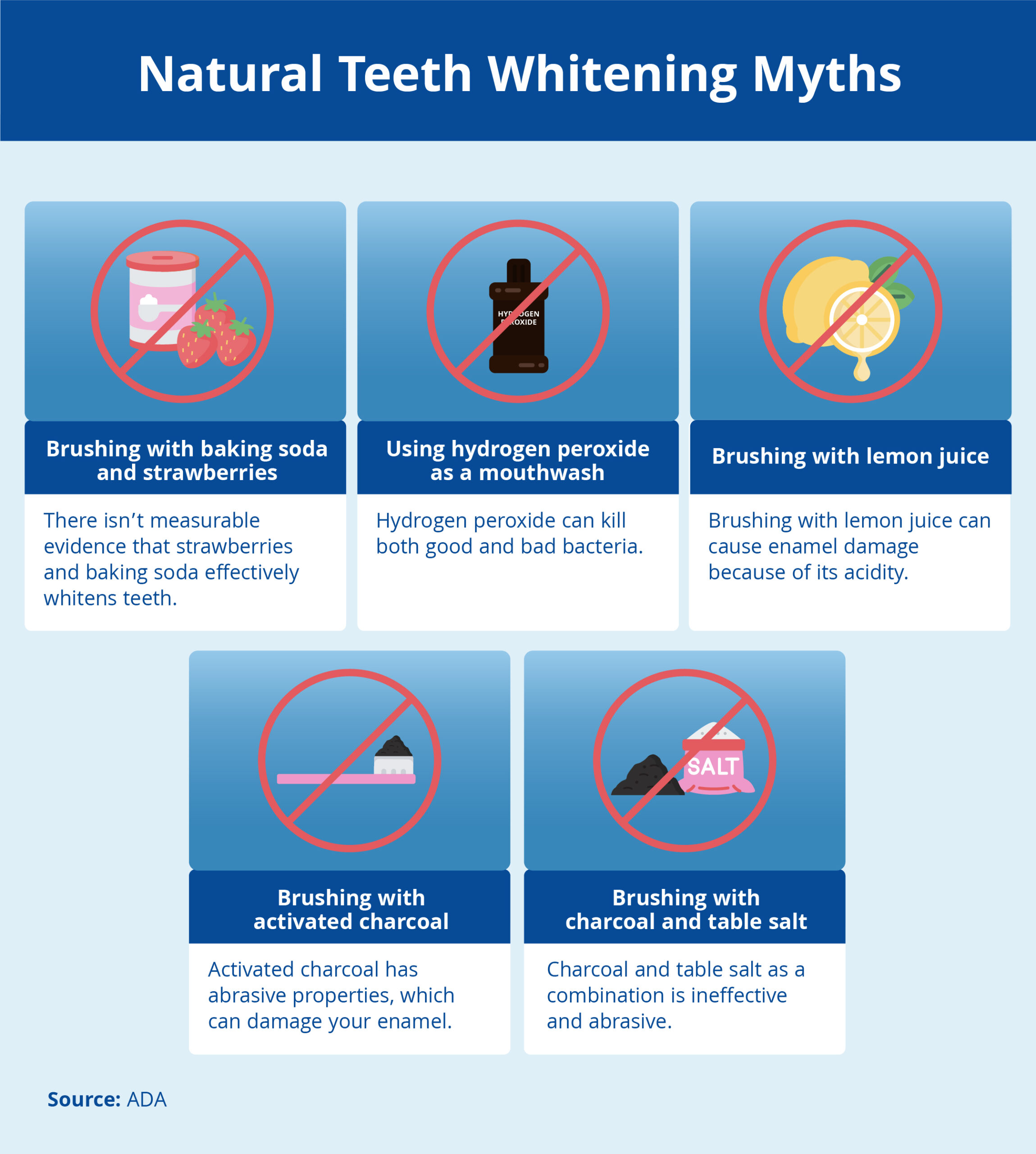
A study examined the results of brushing with a strawberry and baking soda mix and did not see measurable whitening improvement.
Similarly, this study tried to find if strawberries mashed up and applied to your toothbrush could whiten your teeth. The results? There wasn’t enough evidence or support to indicate that this was a feasible method.
While whitening products with baking soda can remove stains from your teeth and help whiten them, brushing with it alone isn’t recommended.
Baking soda is a mild abrasive and can wear down enamel if overused. Enamel does not grow back, so once it’s gone, it’s gone for good.
Hydrogen Peroxide as a Mouthwash
While hydrogen peroxide in specially formulated whitening products does a good job of whitening intrinsic stains, rinsing with it or swishing it around in your mouth won’t significantly impact whitening since it isn’t in contact with your teeth long enough to make a difference.
Even whitening mouth rinses containing hydrogen peroxide showed little improvement without being used in conjunction with other whitening methods, according to one study.
Overuse of hydrogen peroxide as a rinse can also kill off the good bacteria in your mouth.
If you want to go the more natural route with an ingredient like hydrogen peroxide, you can use over-the-counter hydrogen peroxide-based teeth whitening products that are ADA-approved.
Brushing With Lemon Juice
Studies have shown that lemon juice can whiten teeth over time.
However, this method doesn’t come without risks. Acids like lemon juice can cause tooth erosion, which can permanently damage your enamel.
Although lemon juice resulted in a white-frost appearance when used in this study, the risk isn’t worth the possible reward.
Brushing With Activated Charcoal
Activated charcoal is created through high-temperature heating of wood, coconut shells, or bamboo. Studies don’t show that it helps whiten teeth but rather the opposite.
Activated charcoal–containing toothpaste isn’t as effective at whitening as the more conventional alternatives.
Activated charcoal is also abrasive, making it unsafe for your enamel.
Brushing With Charcoal and Table Salt
Studies show that brushing with charcoal and table salt is an abrasive and ineffective method.
Not only does it not help whiten, but it also can cause a yellow cast on teeth, making the teeth look even worse than before.
Both charcoal and table salt are abrasive, meaning they can damage teeth and remove enamel during brushing, doing more harm than good.
What Causes Yellow Teeth?
Yellow teeth can happen for a variety of reasons. The cause is linked to what kind of stain it is, if it’s intrinsic — inside the tooth, impacting your dentin — or extrinsic — on the outer surface of the tooth.
Yellow stains are typically associated with food stains.
Here are some of the most common causes of yellow teeth:
Intrinsic Causes
- Prolonged use of antiseptic mouthwash can disrupt the natural balance of your oral microbiome, leading to a discoloration of the teeth’s inner dentin layer.
- Dental treatments or trauma can damage the inner tooth structure, causing a gradual yellowing from the inside out.
- Certain medications, notably tetracycline antibiotics and some high blood pressure medications, are known to cause intrinsic staining.
- Aging causes your outer enamel layer to thin over time, revealing more of the yellowish dentin beneath.
Extrinsic Causes
- Excessive fluoride, particularly during early childhood, can lead to a condition known as dental fluorosis, which shows up as yellow or brown discolorations on the tooth surface.
- Poor oral hygiene causes plaque buildup and allows staining agents to accumulate on the outer layer of teeth, which causes yellowing over time.
- Dark-colored foods or drinks, such as coffee, tea, or certain berries, can leave stains on the tooth enamel.
- Smoking or using tobacco releases harmful chemicals that cause stubborn stains on the tooth’s external surface.
How To Prevent Yellow Teeth
Keep in mind that everyone’s tooth color is unique.
Having “white” teeth may mean a variety of different shades. But having good oral hygiene goes a long way to helping your teeth not only look nice but be healthier, too.
To help prevent yellowing:
Rinse After Eating Staining Foods
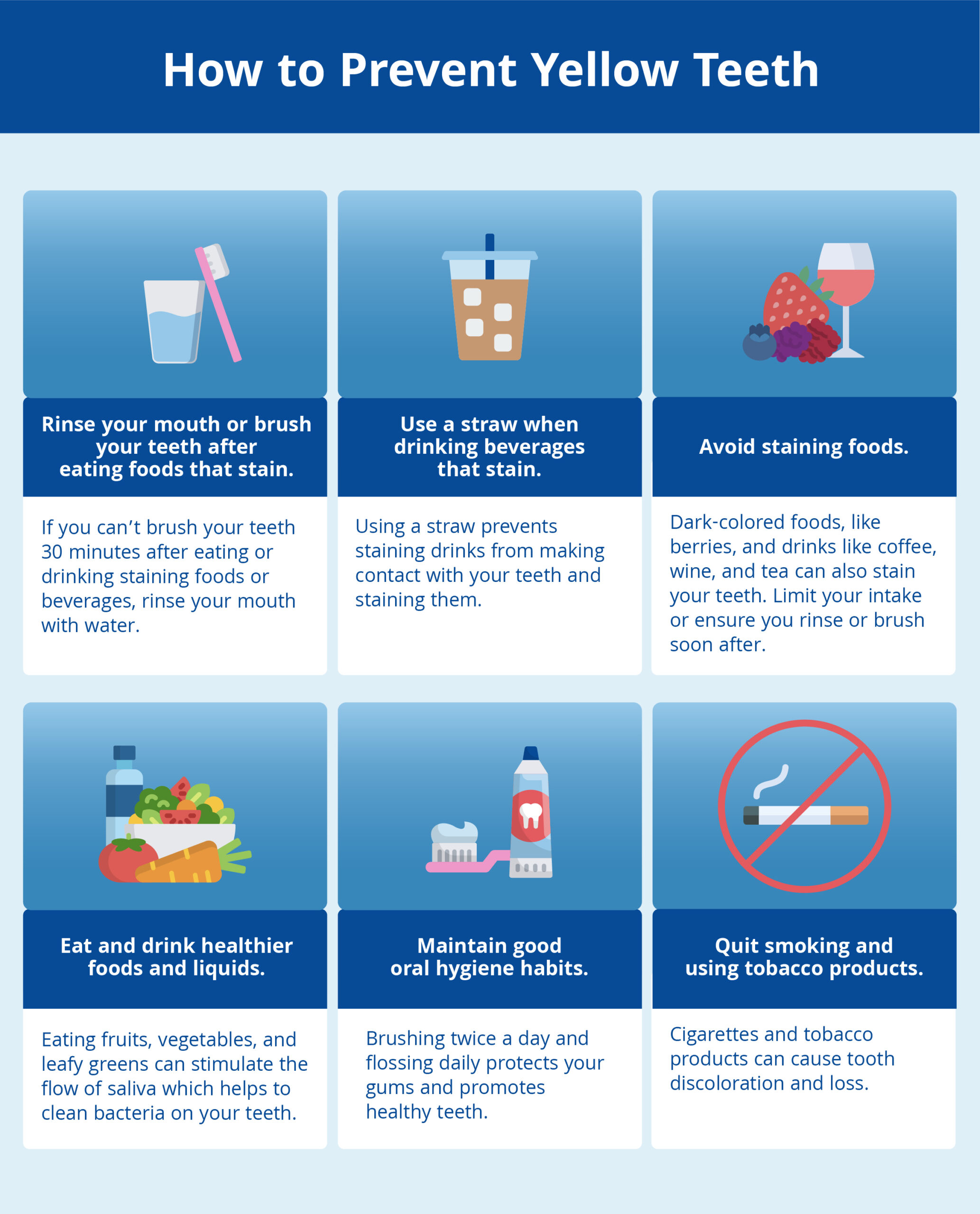
Rinse your mouth or brush your teeth after consuming stain-causing foods. Drinking water after coffee helps prevent bacteria buildup.
Brush your teeth about 30 minutes after having acidic food or drinks to avoid enamel weakening.
Use a Straw for Staining Beverages
When drinking teeth-staining beverages, like iced coffee, use a straw to limit contact with your teeth.
Avoid Staining Foods
Dark-colored foods and drinks like berries, coffee, red wine, and tea can stain your teeth. Rinse or brush after consuming them to prevent stains.
Eat Healthier Foods
A diet rich in fruits and vegetables, especially leafy greens, can help improve the health and appearance of your teeth by stimulating saliva flow and naturally cleaning your teeth.
Practice Good Oral Hygiene
Regular brushing and flossing are crucial for preventing yellowing. Make dental checkups a habit to detect and address any issues early.
Quit Smoking
Smoking is a major cause of yellowing teeth. Quitting is the best way to improve your smile and overall oral health.
Frequently Asked Questions
Can yellow teeth become white again?
Yes, yellow teeth can become white again with proper dental care and treatments. Options like professional whitening, over-the-counter whitening kits, or using snap-on veneers can help restore a bright smile.
How do I get rid of yellow teeth ASAP?
For fast results, professional whitening treatments at a dentist’s office are the most effective. Snap-on veneers can also instantly cover yellow teeth, providing a quick, temporary solution.
Do yellow stains on teeth go away?
Yellow stains can be reduced or removed with proper oral hygiene, whitening products, or professional treatments. In cases of deep stains, snap-on veneers can offer a cosmetic fix by covering the discoloration.
Regain Your Confident Smile
Yellow teeth don’t have to be a permanent problem.
With options like professional whitening, snap-on veneers, and everyday habits like using a straw and avoiding stain-causing foods, you can restore your bright smile safely. For an instant, painless solution, snap-on veneers offer an easy way to cover yellow teeth without trips to the dentist. Ready to see a whiter smile without the hassle? Shop Shiny Smile Veneers today and enjoy a fresh, confident look in no time.