Veneers Pros:
- Natural appearance
- Durable, especially porcelain
- Minimal care required for snap-on options
- No invasive surgery needed with snap-on veneers
Veneers Cons:
- Expensive
- Requires existing teeth
- Not suitable for extensive tooth loss

Struggling to choose between veneers and dentures for your smile makeover?
With so many options, the decision can feel overwhelming.
But it all boils down to what suits your dental needs—whether you’re masking imperfections or replacing lost teeth.
We’ll break down the key differences so you can make the best choice for your teeth.
If you have extensive tooth loss, dentures are likely the better option. However, if your teeth are still intact, veneers could enhance their appearance.
The main difference between veneers and dentures is the purpose they serve. Dental veneers improve the appearance of existing teeth, while dentures replace missing ones.
If you’re missing teeth, you’ll need to explore options like dentures or snap-on veneers rather than traditional veneers.
Here’s how these two options compare:
Veneers are ideal for hiding imperfections on existing teeth, while dentures replace missing teeth entirely.
Veneers are crafted from porcelain, composite resin, or snap-on plastic. Dentures use acrylic, nylon, or resin and can include implant support.
Veneers require minimal enamel removal or can be fitted with a snap-on option. Dentures involve taking impressions, multiple fittings, and possibly extractions.
Porcelain veneers can last 10-20 years, composite 5-7 years, and snap-on versions are easily replaceable. Dentures typically last 7-10 years, with relining needed every 1-2 years.
Porcelain veneers range from $925 to $2,500 per tooth, composite veneers from $250 to $1,500, and snap-on options at around $570. Dentures cost between $500 and $3,500, depending on the type.
Traditional veneers require 2-3 dental visits; snap-on versions take 1-2 weeks. Dentures can take a few weeks to several months, depending on adjustments.
Veneers need daily brushing and avoiding hard foods. Dentures require nightly removal, daily cleaning, and periodic adjustments.
Veneers need existing teeth and aren’t suitable for severe oral issues. Dentures are ideal for those missing teeth, with full sets sometimes requiring complete extractions.
Veneers are thin shells made from porcelain, composite resin, or a removable material like snap-on plastic.
They are custom-made to fit over the front of your teeth to conceal cracks, chips, gaps, and discoloration.
Traditional veneers are a permanent cosmetic solution that requires filing down some of the tooth enamel, while snap-on veneers can be removed and do not alter your natural teeth.
Let’s take a look at the different types:
Porcelain veneers are durable and long-lasting. To fit them a small amount of enamel is removed from your tooth.
They offer a highly natural appearance.
Composite veneers are less expensive than porcelain and involve less enamel removal. They are less durable.
A more temporary, non-invasive alternative to permanent veneers that fits over your teeth like a mouthguard.
Snap-on veneers are an excellent option for those looking for an affordable and removable solution.
For traditional veneers, the process typically involves:
Snap-on veneers, on the other hand, can be fitted at home without any invasive procedures.
Porcelain veneers can last up to 20 years with proper care, while composite veneers may last around 5 to 7 years.
To extend the life of your veneers, be sure to:
Snap-on veneers are more flexible since they are easily replaceable and removable.
Dentures, or false teeth, are removable appliances that replace missing teeth and restore both function and appearance.
Unlike veneers, dentures are suitable for individuals who have lost all or most of their teeth.
They come in various types:
These replace an entire set of teeth. They can be either conventional (placed after healing from extractions) or immediate (placed right after extractions).
These fill gaps where some natural teeth remain, securing to nearby teeth or the jawbone.
Also known as snap-in dentures, these are held in place by dental implants for increased stability.
These attach permanently to implants but can only be removed by a dentist.
The procedure to get dentures can take a few weeks and involves:
Dentures generally last between 7-10 years, but you should visit the dentist regularly for relining (adding material to the denture base).
Proper care includes:
Let’s break down the pros and cons of veneers vs dentures:
If dentures or veneers don’t sound like the right fit, consider these alternatives:
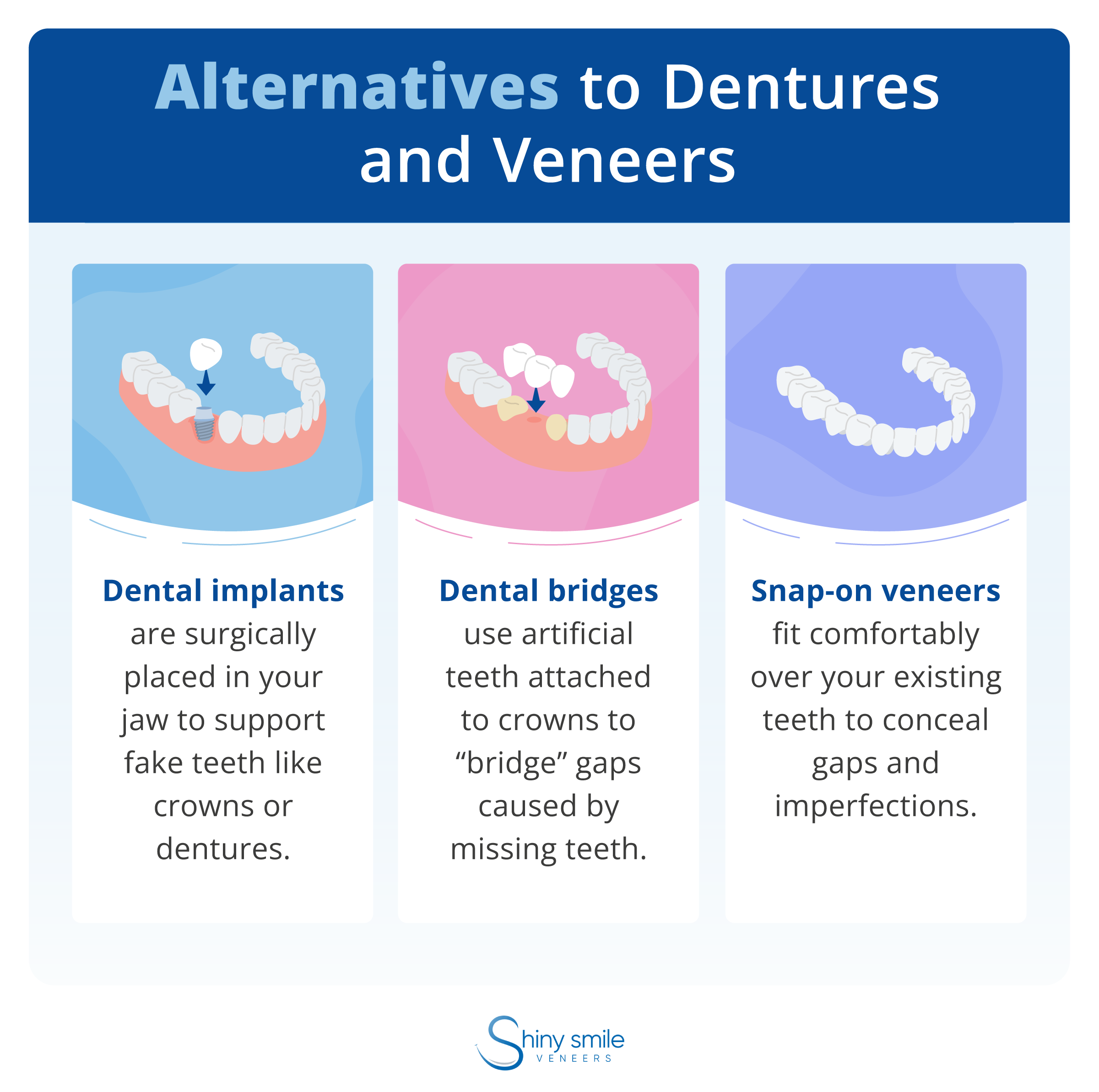
Dental implants are artificial tooth roots placed into your jaw and then combined with prosthetic teeth (or fake teeth) like crowns and bridges.
Getting implants requires surgery so there may be some discomfort. Gums usually take several weeks to heal so you may experience some pain.
There are some risks associated with dental implants, including injury to the surrounding teeth and gums during surgery.
A dental bridge can fill a gap caused by missing teeth. It uses an artificial tooth attached to crowns on either side of the gap.
However, to get a bridge you need healthy teeth on either side of the missing ones.
Dental bridges don’t require surgery but do require a visit to a dentist, and you may experience some discomfort as the replacement teeth are fitted.
Removable snap-on veneers fit over your existing teeth like a mouth guard. While you can use snap-on veneers for missing teeth, you still need some teeth for them to attach to.
Removable veneers don’t need a dentist visit and there’s no need for surgery or the risk of potential discomfort or complications when getting real-looking fake teeth.
We’ll give you a flawless smile—no dentist, no surgery.

This depends on your specific dental needs. Veneers are best for covering imperfections, while dentures replace missing teeth.
No, veneers require existing teeth. If you’re missing teeth, snap-on veneers or dentures may be better options.
Dentures replace missing teeth, while veneers cover and enhance existing teeth.
Pop-on veneers are removable and fit over your teeth without surgery, while dentures replace missing teeth entirely.
Veneers are perfect for covering up imperfections, giving you a bright and natural look if your existing teeth are in decent shape. Dentures are the go-to for replacing missing teeth, restoring both appearance and function.
For a non-invasive option, snap-on veneers let you skip the dentist without sacrificing style. If you’re ready to upgrade your smile without the fuss of surgery, our custom snap-on veneers offer an easy, affordable solution. Say goodbye to complicated procedures—get your perfect smile today. Shop Shiny Smile now.