Veneers vs. Dental Implants: Which Is Right for You?
Trying to decide between veneers and dental implants?
It’s a big choice, and getting it right matters.
Whether you’re covering cosmetic flaws or replacing missing teeth, each option has its pros and cons.
We’ll break down the key differences so you can pick the best solution for your smile and look at some alternative options.
Key Notes
Veneers are ideal for quick fixes; implants are for replacing entire missing teeth.
Implants prevent bone loss and offer a lifetime solution.
Veneers provide a cosmetic boost but involve permanent enamel removal.
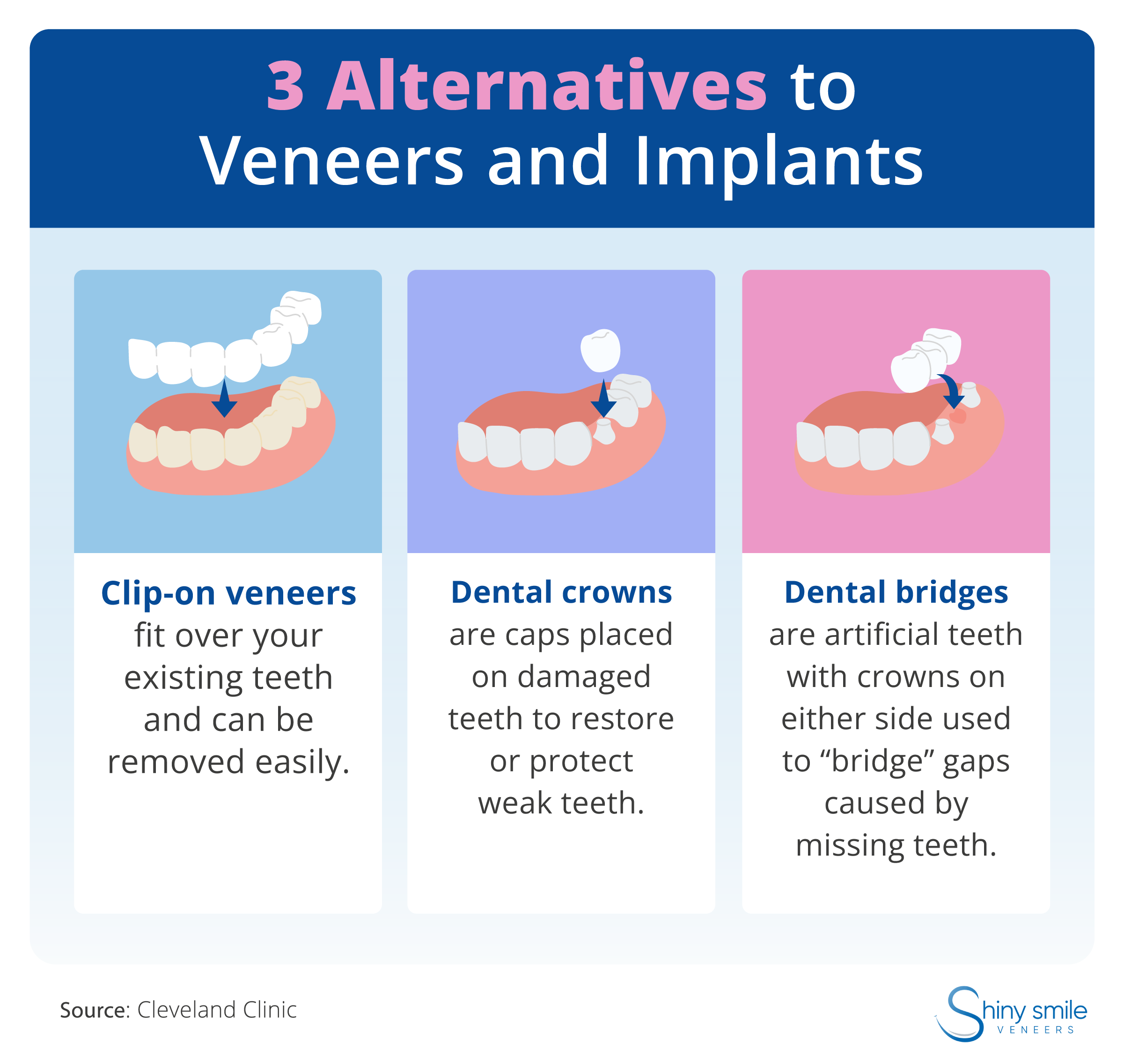
Snap-on veneers are a budget-friendly, non-permanent alternative for instant smile upgrades
Key Differences Between Veneers and Implants
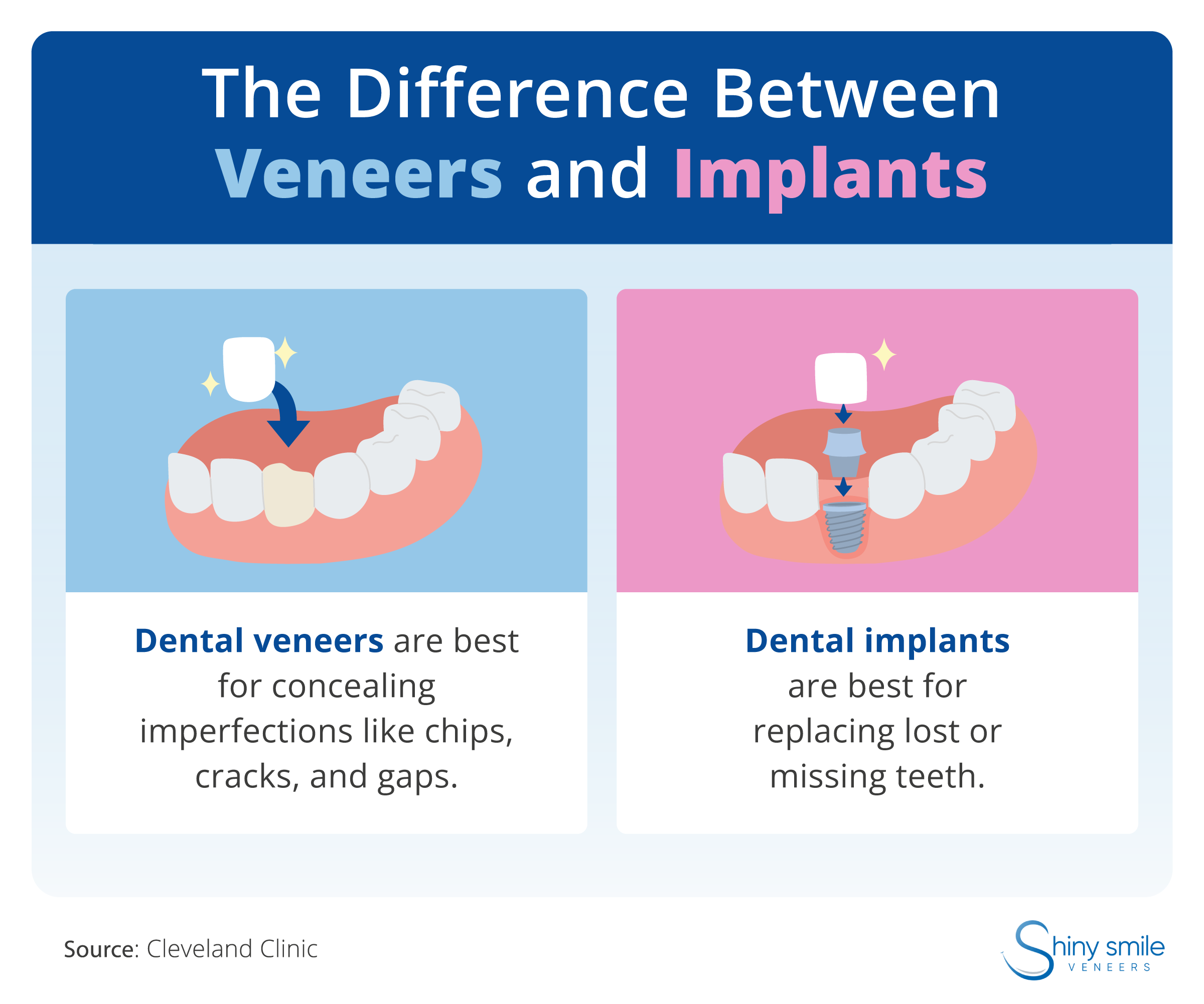
In a nutshell, veneers cover cosmetic issues, while implants replace missing or damaged teeth.
If you lose a tooth due to disease or injury, your dentist may surgically insert a dental implant into your jawbone.
If your primary concern is cosmetic, however, you can have a dentist apply veneers to conceal discoloration, gaps, or chips in your natural teeth.
Dental Veneers
Dental Implants
Purpose
Concealing aesthetic imperfections
Replacing missing teeth
Material
Porcelain or composite resin
Usually ceramic or titanium
Procedure
Enamel is removed from teeth to place veneers
Implant surgically fitted to jaw and crown attached to implant
Advantages
May resist staining more than natural tooth enamel
No special maintenance or care
Preserves jawbone health
Don’t get cavities
Disadvantages
Can become damaged or dislodged
Tooth can still decay under veneer
Complications or injuries from surgery
Long healing process (up to 8 months)
Longevity
Porcelain: 10 years or longer Composite: 5 years or longer
Can last a lifetime
Cost
Porcelain: $925 – $2,500 Composite: $250 – $1.500
$3,000 – $4,500 per tooth (up to $60,000 to replace all teeth)
What Are Veneers?
Veneers are like the Instagram filter for your teeth, just more permanent.
Dental veneers are thin shells that cover the front surface of your teeth, masking issues like chips, discoloration, or even slightly misaligned teeth.
A traditional veneer needs your dentist to grind down your tooth structure. Sometimes, they remove some tooth past the enamel to get proper placement.
This is irreversible and can be painful. In addition, you will often need to be given a local anesthetic.
How Do You Get Veneers?
The process is straightforward but requires a couple of visits to your dentist.
First, a bit of your natural enamel is removed, and then impressions of your teeth are taken.
If you’re going with porcelain veneers, your dentist sends these impressions to a lab, and you get custom veneers in about two weeks. In the meantime, you might wear temporary veneers.
Once your custom ones arrive, they’re bonded to your teeth, and you’re ready to show off that new grin.
Cost of Veneers
On average, traditional veneers will cost around $925 to $2500 per tooth and will last you ten to fifteen years.
While the upfront cost is fairly high, traditional veneers are cost-effective in the long run.
Some of the factors that can impact the cost of your veneers are:
Implants can last a lifetime, while veneers typically last 10-20 years.
Are veneers implants?
No, veneers are not implants but rather cosmetic shells that cover your teeth. Implants replace the entire tooth.
What is better, veneers or implants?
For missing teeth, implants are better. For cosmetic fixes, veneers are the way to go.
Conclusion
When it comes to choosing between veneers and dental implants, the decision hinges on your unique needs.
Veneers are great for cosmetic touch-ups, like hiding chips or discoloration, while implants are a long-term solution for missing teeth, preserving your jawbone and lasting a lifetime. Not ready for the commitment or cost? Snap-on veneers offer a budget-friendly, non-invasive alternative, letting you achieve a stunning smile without any dental visits. Explore your options and shop now for a quick, affordable smile upgrade with Shiny Smile Veneers.