

Thinking about upgrading your smile? Veneers could be the perfect way to get the look you want.
But not all veneers are the same—some are quick fixes, while others are designed to last. The veneers cost can also vary dramatically depending on which option you choose.
Whether you want a temporary boost or a long-term solution, there’s a type of veneer that’s right for you.
We’ll unpack all the types of veneers and cost breakdowns, plus what the process actually looks like for each option.
- Veneers cost ranges from $250 for composite to $2,500+ for premium porcelain per tooth.
- Porcelain veneers are the most durable, lasting over 10 years with proper care.
- No-prep veneers like Lumineers don’t require enamel removal, making them a less invasive choice.
- Snap-on veneers offer a no-commitment, removable option starting at $370 for a full arch.
Are Veneers Right For You?
Veneers are a great solution to many dental problems, but they aren’t for everyone. If you’re not sure whether veneers are right for you, consult with your dentist for their recommendation.
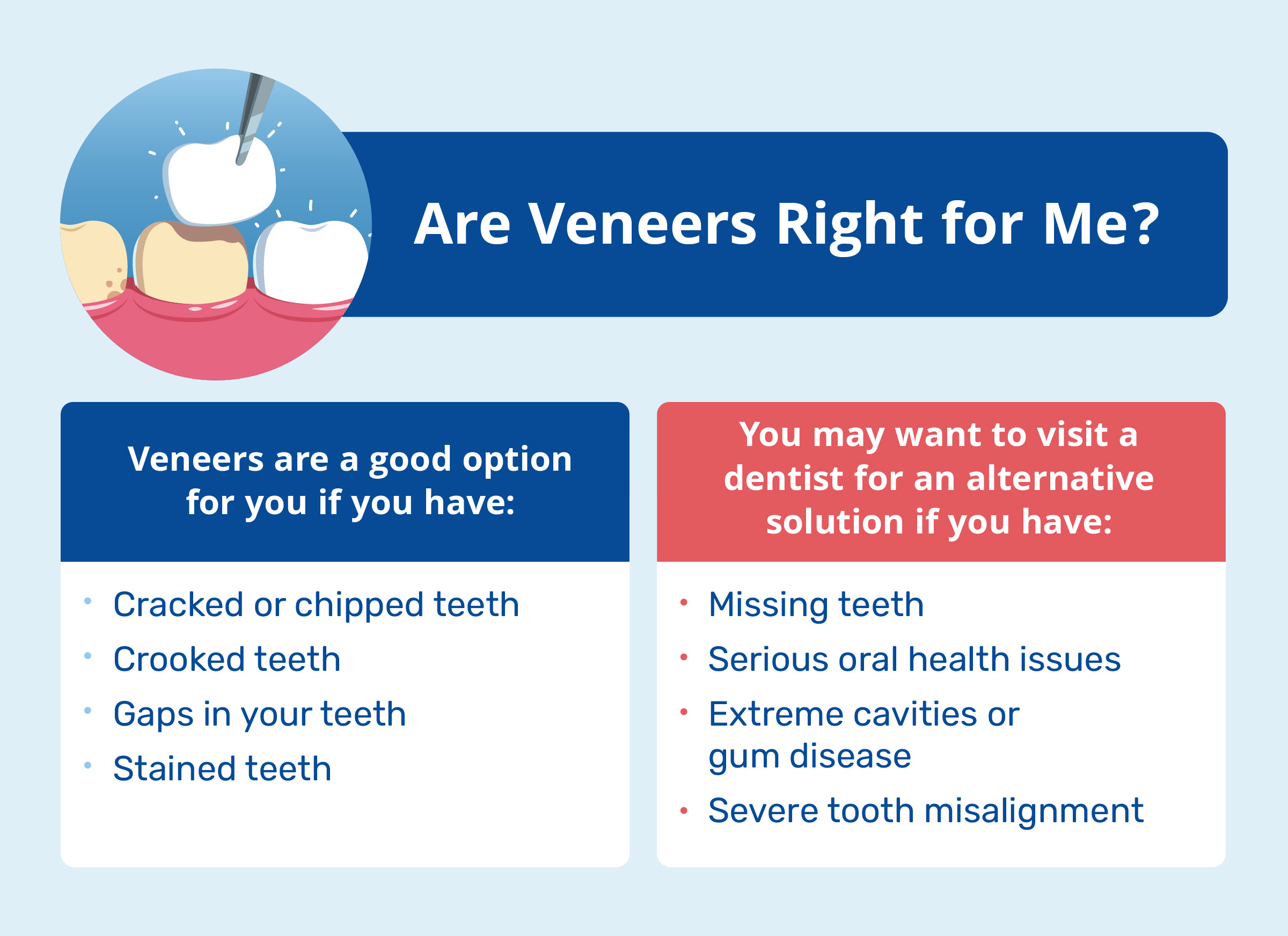
Typically, veneers help with dental conditions like:
- Cracked or chipped teeth
- Crooked teeth
- Gaps in teeth
- Discoloration or stained teeth
You might want to consider a different dental treatment for things like:
- Missing teeth
- Serious oral health issues
- Extreme cavities or gum disease
- Severe tooth misalignment
How Many Types of Veneers Are There?
There are 5 main types of veneers available today, each with different materials, procedures, and cost structures.
Understanding your veneer options helps you make the best choice for your smile and budget.
1. Composite Resin
Permanent composite resin veneers are a cheaper alternative to porcelain veneers.
However, they’re less durable, so they’ll need to be replaced more often, and the composite materials used to make them are more susceptible to staining.
Similar to porcelain veneers, you can have composite veneers fixed if they get damaged.
While the dental procedure is less invasive compared to porcelain veneers, you’ll still have some enamel removed, just not quite as much. The process involves minimal drilling of the enamel. Then, a composite resin filling is placed on top of the teeth that bonds directly to the teeth.
The procedure typically takes about one day.
Durability:
Lasts five years or more
Cost:
$250 to $1,500 per tooth
Choose composite if:
- You want a cheaper upfront cost than porcelain.
- You want a quick, permanent, veneer process that takes a day.
2. Porcelain
Porcelain veneers are traditional veneers. They’re the most natural-looking option you can get because this veneer material looks the most like our natural tooth enamel.
They’re more stain-resistant and durable than composite resin or even other kinds of ceramic veneers, giving them the longest lifespan of any veneer.
The procedure involves two or three dentist visits over a six-week period. During these visits, you’ll get x-rays, impressions, and photographs of your teeth. Similar to composite resin, the main veneer procedure involves tooth preparation where your dentist drills down your enamel to make space for your new porcelain tooth coverings.
Porcelain veneers are highly customizable in terms of their color, shape, fit, and size, so they may take some time for a dental lab to create.
Your dentist might send you home with temporary veneers to wear until your porcelain ones are ready.
Once they’re ready, you’ll be back in the office again to have the porcelain veneers bonded to your teeth.
Durability:
Lasts 10 years or more
Cost:
$925 to $2,500 per tooth
Choose porcelain if:
- You want the most natural-looking veneers.
- You want long-lasting, permanent veneers.
3. Snap-On
Snap-on veneers are a type of non-permanent veneer. You put them on like a mouthguard—they “snap on” to your teeth.
With snap-on veneers, you can get a perfect smile in an instant without risking damage to your teeth. You won’t have to get any enamel removed or dental cement applied to your tooth surfaces. You can also remove these veneers as needed.
You can get custom-made clip-on veneers using an at-home impressions kit. Simply make your impressions, send them back in, and receive your fitted veneers in the mail.
Durability:
One to five years depending on how you take care of them. You can eat soft foods and drink cold liquids while wearing them.
Cost:
- $370 for Shiny Smile Veneers single arch
- $570 for Shiny Smile Veneers top and bottom set
Choose snap-on if:
- You want a non-permanent option that doesn’t require a dentist visit.
- You want an inexpensive option.
4. No-Prep (Lumineers)
No-prep veneers, a type of semi-permanent veneer, give you the option of having porcelain tooth coverings without the enamel removal.
Though your teeth can still be damaged if you have semi-permanent veneers installed and then taken out, no enamel is removed to place them on your teeth.
Lumineers are the most popular brand of no-prep veneers. Other brands include DURAthin and Vivaneers. These veneers can typically be created and adhered to your teeth in a same-day procedure, making it an easy process.
Durability:
The manufacturers of Lumineers claim they last up to 20 years, but other sources report that they only last up to 10 years.
Cost:
Lumineers cost between $800 and $2,000 per tooth.
Choose no-prep if:
- You want a quick and easy process that takes a day.
- You want the next closest thing to permanent veneers without being permanent.
5. Palatal
Palatal veneers, also known as palatal onlays or lingual veneers, are veneers made of either composite or porcelain material that are placed on the inside of your teeth.
This type of veneer is sometimes used as a less-invasive alternative to dental crowns.
They’re called palatal veneers because of where they’re placed — on tooth surfaces that face the inside of the mouth, helping to restore your anterior or front teeth from wear and tear. They might be a good option if your teeth are damaged by dental erosion, deep bite, or bruxism.
Placement is a multi-step process that happens over several weeks.
First, your dentist takes impressions of your teeth. Once the veneers are made, they’re bonded to the backsides of your teeth. A small amount of enamel may be drilled down in order to make room for the veneers, making the process permanent or irreversible.
Durability:
Five years or more
Cost:
$600 to $1,200 per tooth
Choose palatal veneers if:
- You need to restore anterior teeth due to erosion or damage.
- You want to address both cosmetic and practical teeth restorations.
What’s the Best Type of Veneers?
The best kind of veneers depends on your specific needs, budget, and long-term goals:
For longevity and natural appearance: Porcelain veneers are typically considered the gold standard.
For budget-conscious patients: Composite resin offers a permanent solution at lower cost.
For those wanting to avoid permanent changes: Snap-on veneers provide flexibility and affordability.
For minimal tooth preparation: No-prep veneers like Lumineers offer a middle ground.
Why Are Veneers So Expensive?
Several factors contribute to the high veneers dentist cost:
- Custom fabrication: Each veneer is individually crafted in a dental lab
- Premium materials: High-quality porcelain and ceramics cost more
- Skilled labor: Dental technicians and dentists require specialized training
- Multiple appointments: The process requires several visits and temporary veneers
- Longevity: Quality veneers are designed to last 10-20+ years
2 Front Teeth Veneers Cost
If you only need veneers for your two front teeth, here’s what you can expect:
- Composite: $500-$3,000 total
- Porcelain: $1,850-$5,000 total
- No-prep: $1,600-$4,000 total
- Snap-on (single arch): $370 total
Many patients start with just their front teeth since these are most visible when smiling.
Risks of Veneers: What You Should Know
While veneers can deliver a dramatic smile transformation, it’s essential to understand the potential risks involved before committing to any type.
Here are some key risks associated with veneers:
1. Irreversibility (Permanent Veneers)
Traditional porcelain and composite veneers require enamel removal, which is irreversible.
Once the tooth enamel is filed down, you cannot go back to your natural teeth. If a veneer is damaged, it must be replaced.
2. Tooth Sensitivity
After enamel removal, some patients experience heightened tooth sensitivity, especially to hot or cold temperatures.
This can last for several weeks post-procedure.
3. Veneer Damage
Though durable, veneers are not indestructible.
They can chip or crack, particularly if you eat hard or sticky foods or engage in teeth grinding (bruxism). Damaged veneers will need to be replaced or repaired, which can be costly.
4. Gum Irritation
Improperly fitted veneers can cause gum inflammation or irritation. This is especially important to address early to avoid long-term issues.
5. Staining (Composite Veneers)
While porcelain veneers are stain-resistant, composite veneers can discolor over time due to factors like smoking or consuming staining foods and beverages, requiring replacement to maintain their appearance.
Tips for Maintaining Your Veneers
Proper maintenance and good dental hygiene are key to getting the most out of your treatment.
Regardless of which type of veneer you choose, these tips can help you keep them in good shape:
Keep up with oral hygiene
Care for your veneers the way you would care for your teeth.
Taking care of your oral health with regular brushing, flossing, and rinsing with alcohol-free mouthwash can help your veneers last for years to come.
Schedule regular dental care
Just like with your natural teeth, visiting your dentist helps ensure your veneers are in good condition and provides the opportunity to identify any issues before they become a serious problem.
Brush your teeth regularly
Many types of veneers are vulnerable to certain diets, like high-acid or high-sugar foods, and habits like smoking or drinking.
Brushing your teeth can help prevent these things from damaging your veneers.
Be conscious of the foods you eat
This is especially true for sticky or hard foods. In addition to being more vulnerable to acidic or sugary foods, sticky and hard foods can chip or wear down your veneers.
It’s best to either avoid them or be very careful.
Want A Hollywood Smile That’s Built To Last?
Our snap on veneers give you years of confident smiles.
SHOP NOW
Frequently Asked Questions
Can veneers be whitened after they are applied?
No, veneers cannot be whitened. It’s important to choose a shade you’ll be happy with long-term.
Do veneers feel different from natural teeth?
It may take a few days to adjust, but they should feel natural after that period.
Can you get cavities under veneers?
Yes, the underlying tooth can still get cavities, so proper oral hygiene is crucial.
Are veneers reversible?
Permanent veneers are not reversible due to the enamel removal during the procedure.
Conclusion
When it comes to getting the smile you want, you’ve got options.
The different types of veneers and cost vary quite a bit – porcelain gives you that premium, long-lasting result but comes with the higher price tag and permanent commitment.
Composite resin offers a middle ground that’s permanent but more affordable. No-prep options like Lumineers let you skip the enamel removal, while palatal veneers tackle specific issues from behind your teeth.
And then there are snap-on veneers, which let you skip the dentist entirely and still get that confidence boost.
Each option has its place depending on what you’re willing to spend, how long you want them to last, and whether you’re ready for something permanent.
If you want to test the waters without the commitment or hefty cost of traditional dental work, snap-on veneers give you that instant smile upgrade you can remove whenever you want. Shop now!