

Got a gap in your teeth that’s stealing your confidence?
There are real solutions that fit every lifestyle, budget, and goal.
From fast cosmetic fixes to lasting changes, here’s what you need to know to choose the best option.
We’ll break down what works and why, so you can get back to smiling without second thoughts.
- Dental bonding closes small gaps in under an hour for $100-$400 per tooth.
- Porcelain veneers last up to 10 years; composite veneers cost less but last 5 years.
- Clear aligners can close gaps in less than a year for $3,000-$5,000.
- Snap-on veneers provide a dentist-free solution for $370-$570.
- Gaps over 0.5mm are called diastema and may need specialized treatment.
- Gaps over 0.5mm are called diastema and may need specialized treatment.
5 Solutions to Close a Gap in Your Teeth
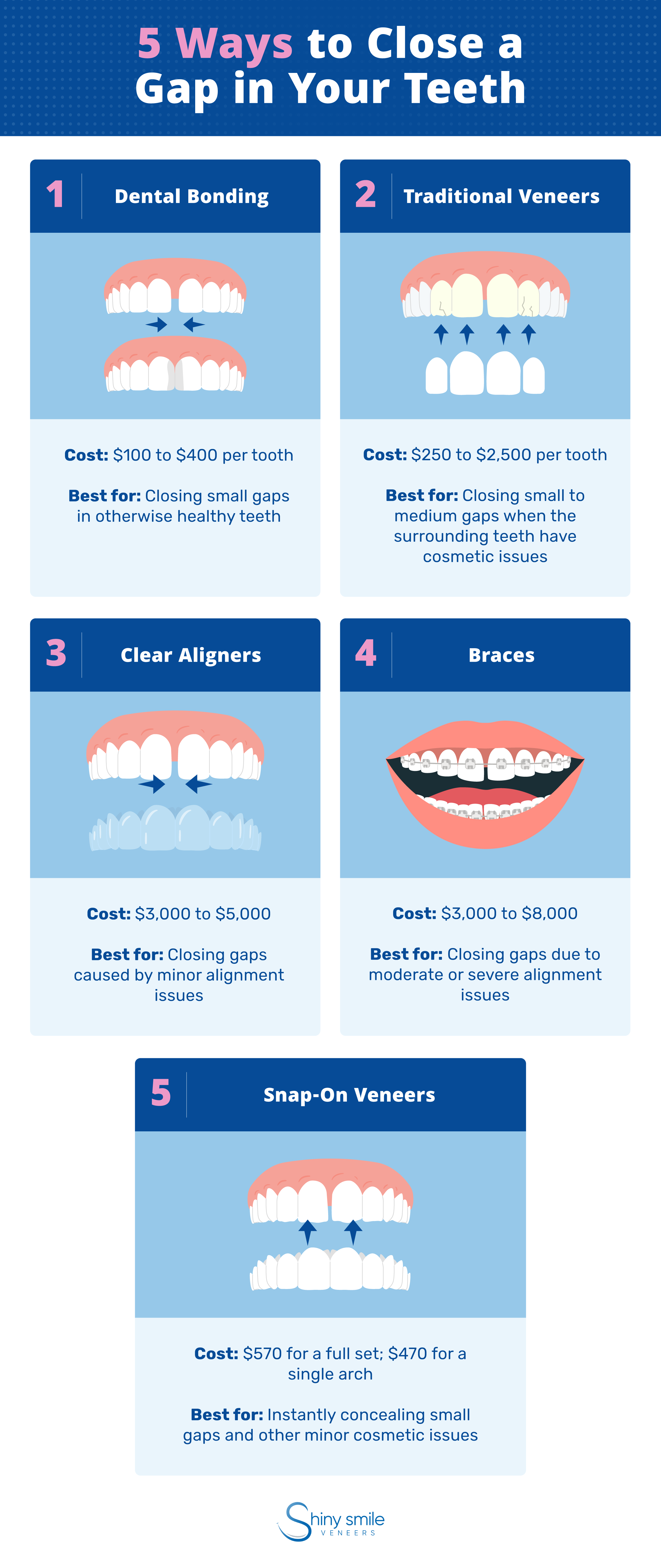
1. Dental Bonding
Best For: Small gaps in otherwise healthy teeth.
Dental bonding is a great solution for closing small gaps in teeth. It’s fast, affordable, and minimally invasive. It takes between 30 to 60 minutes per tooth.
A dentist applies a tooth-colored resin to your teeth and hardens it with a special light to fill the gap and create a uniform appearance.
- Cost: $100 to $400 per tooth (insurance may cover it).
- Duration: 3 to 10 years.
2. Traditional Veneers
Best For: Closing small to medium gaps and cosmetic improvements.
Veneers are dentist-made shells that cover the front of your teeth, masking gaps and other imperfections.
This option is permanent since a portion of your enamel is removed before veneers are applied. Veneers can last many years and improve the look of discolored or chipped teeth.
There are two types:
- Porcelain veneers: These look natural but require more enamel removal. They last about 10 years and cost between $925 to $2,500 per tooth.
- Composite resin veneers: Less durable but cheaper, costing $250 to $1,500 per tooth. They last up to five years.
3. Clear Aligners
Best For: Gaps caused by minor alignment issues.
If you want to know how to close a gap in your teeth without braces, clear aligners like Invisalign could be a great option.
These clear trays gradually shift your teeth together, closing gaps over time. You’ll wear one set for two weeks, then switch to a smaller set until the gap is closed.
Clear aligners are comfortable, and they’re less noticeable than traditional braces. However, you should wear them for at least 20 hours a day.
- Cost: $3,000 to $5,000 (insurance may cover it).
- Duration: Treatment takes less than a year.
4. Braces
Best For: Large gaps or moderate to severe alignment issues.
Braces are the most reliable solution for closing large gaps as they put steady pressure on your teeth over time.
Traditional metal braces are often used, but there are alternatives, like ceramic braces, lingual braces (placed on the back of the teeth), and self-ligating braces that use clips instead of elastic bands.
- Cost: $3,000 to $8,000 (insurance may cover orthodontic treatment).
- Duration: 1 to 3 years, depending on the severity of the gap.
5. Snap-On Veneers
Best For: Temporarily covering small gaps and improving cosmetic appearance instantly.
Snap-on veneers are a quick and non-invasive way to hide a gap in your teeth at home.
The realistic fake teeth clip over your existing teeth, concealing gaps and other cosmetic issues without altering your natural teeth.
You order your veneers online, use the at-home impression kit and receive a unique set of perfectly matching veneers. This means there’s no going back and forth to the dentist.
With regular use, you can expect your veneers to last one to five years.
- Cost: $370 for a single arch, $570 for a full set (payment plans available).
- Duration: 2 to 5 years with regular use.
Gap Got You Down? Smile Confidently Today
Take the instant, painless & dentist-free gap closure route.

Why Teeth Gaps Happen
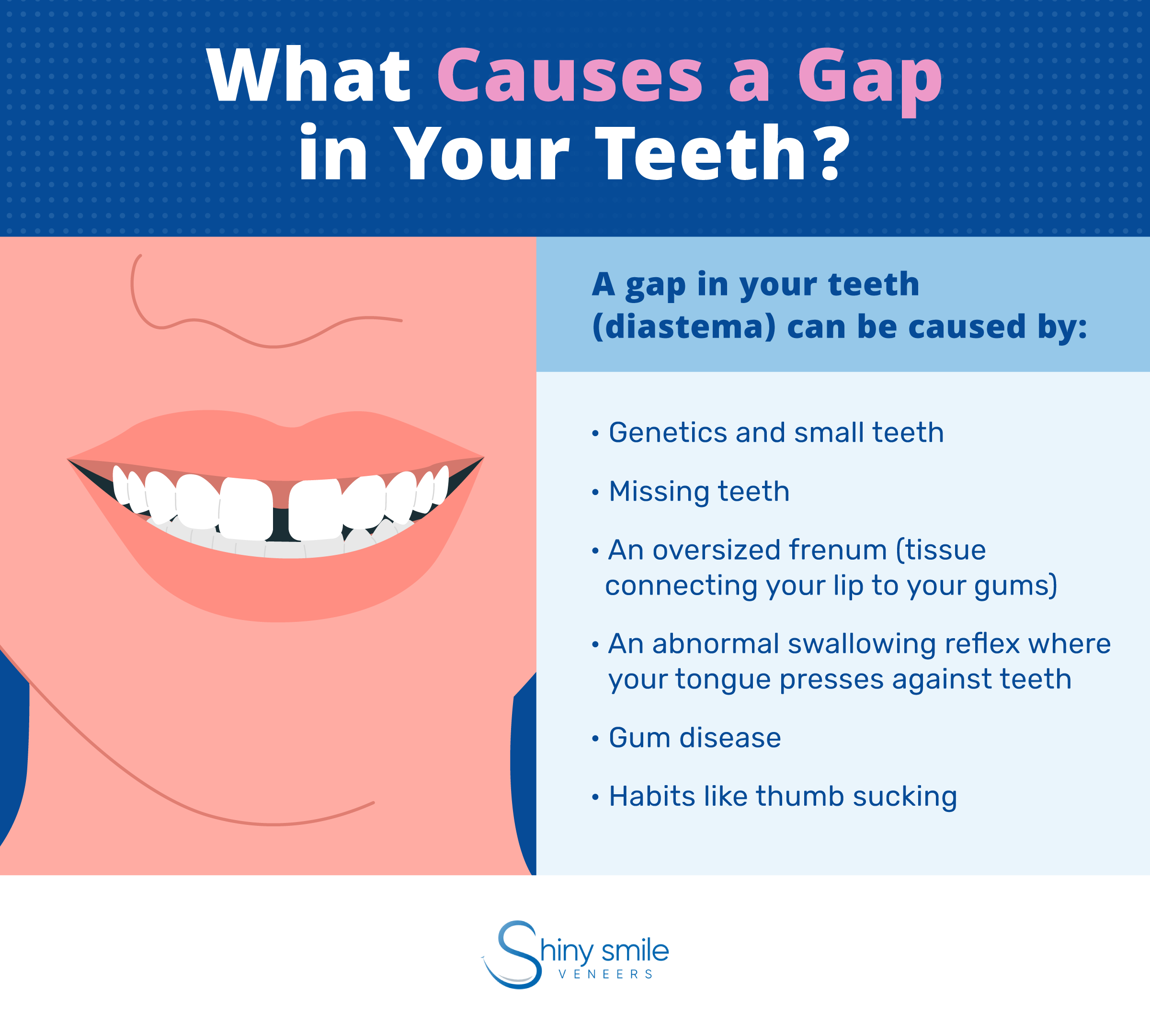
There are various reasons why people get gaps in their teeth.
If the gap is wider than 0.5mm, dentists call it diastema. Although gaps appear most frequently between your upper front teeth, in reality, they can appear anywhere in your mouth.
If the gap in your teeth is because of gum disease, it’s important to treat the underlying issue before closing the space.
Similarly, if the problem is an oversized frenum, your dentist may recommend a frenectomy (surgical tissue removal) to stop future spacing.
Here are the most common causes of teeth gaps:
1. Genetics
People born with smaller teeth often end up with extra spacing because their teeth are too small for their jaw.
2. Missing Teeth
Losing a tooth can cause surrounding teeth to shift and create gaps.
3. Oversized Labial Frenum
A large frenum (the tissue connecting the upper lip to the gums) can push the teeth apart, causing a gap.
4. Swallowing Reflex
Sometimes, tongue thrusting while swallowing puts pressure on the front teeth, creating gaps.
5. Gum Disease
Inflammation caused by poor oral hygiene can loosen teeth, leading to gaps.
6. Bad Habits
Thumb sucking or tongue thrusting can push teeth out of alignment, causing spaces to form.
Should You Close the Gap Between Your Teeth?
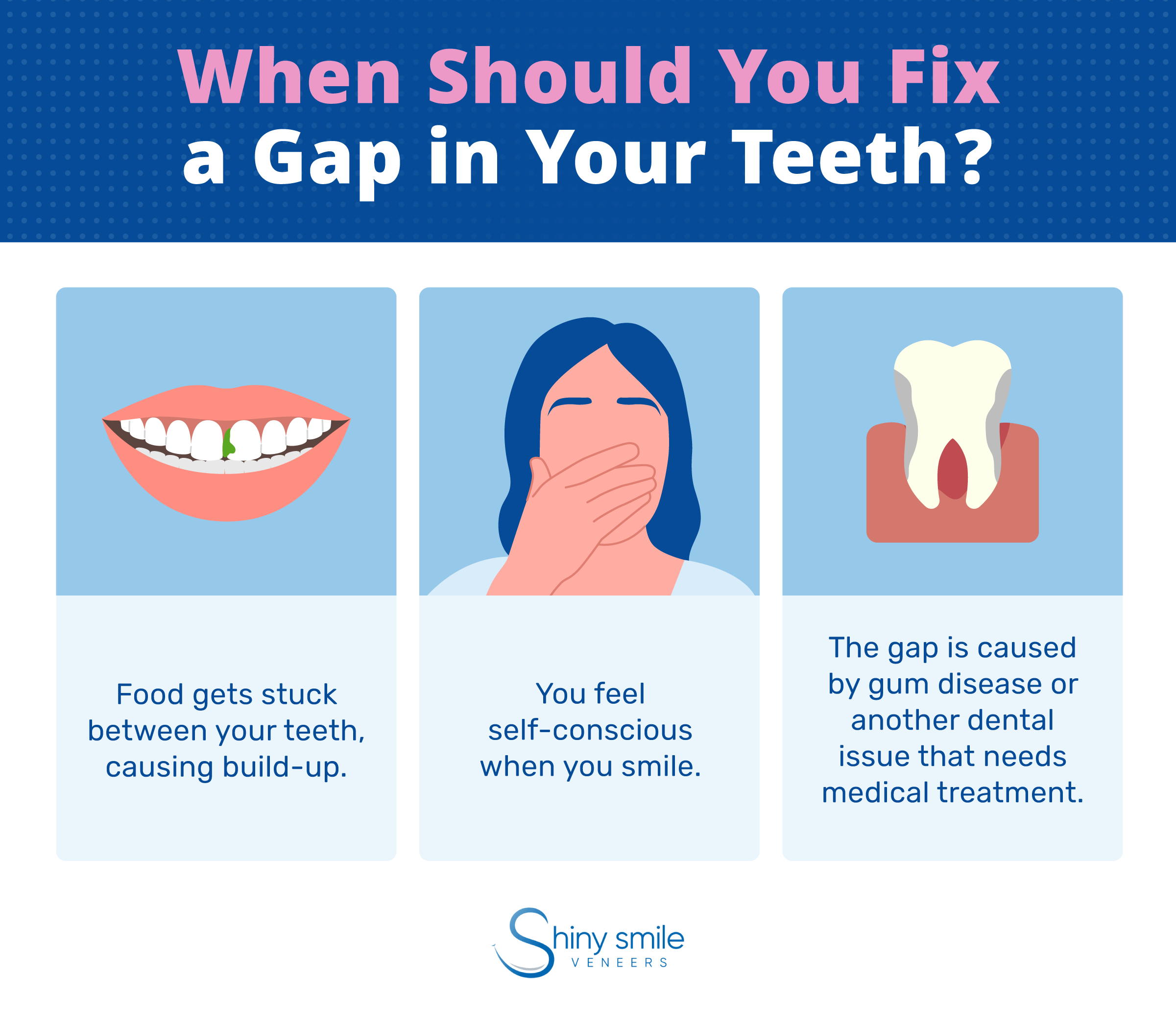
Not every gap needs treatment, but if it affects your speaking, eating or makes you self-conscious, there are solutions to explore.
On the other hand, if the gap is due to gum disease, ignoring the issue can lead to more severe dental problems.
Treat the underlying cause first before focusing on the cosmetic aspect.
Frequently Asked Questions
Can you reduce a gap naturally at home?
Your teeth are essential to your day-to-day life, so don’t risk damaging them by trying any DIY remedy to close gaps. You should always go to the dentist to fix gaps. If you don’t enamel removal or pressure on your teeth, then simply conceal the gap.
How can I close a gap in my teeth at home?
While there are no safe DIY methods for permanently closing gaps at home, snap-on veneers let you temporarily hide a gap without a dentist visit. Custom-fit and easy to use, they offer an instant improvement.
Can teeth gaps be closed without braces?
Yes, you can close gaps without braces using clear aligners, dental bonding, and veneers. These methods work for small to medium gaps and may be less noticeable or invasive.
What’s the cheapest way to close a gap in my teeth?
The cheapest way to close the gap in your teeth is snap-on veneers. They instantly transform your smile, are non-invasive and work well for small gaps.
Conclusion
Closing the gap in your teeth is more accessible than ever, with various solutions tailored to your needs.
Whether you prefer the quick fix of dental bonding, the long-term investment of veneers, or the convenience of clear aligners, there’s a method that fits your lifestyle and budget. Snap-on veneers offer a hassle-free, non-invasive way to improve your smile instantly, perfect for those seeking a temporary but impactful change.
Remember to consult a dental professional to determine the best approach for your unique situation. Ready to achieve a confident smile without the dentist visit? Shop Shiny Smile Veneers today.