
Wondering if veneers are removable or permanent?
The truth is, once traditional veneers are applied, they’re permanent. Your enamel gets shaved down, and there’s no going back.
While they offer a lasting solution for a beautiful smile, it’s a serious commitment.
If you’re looking for a non-permanent option, snap-on veneers might be a better fit.
We’ll break down what you need to know.
- Traditional veneers are permanent, requiring the irreversible removal of natural enamel.
- Porcelain veneers can last up to 20 years, but there’s no turning back.
- Snap-on veneers offer a removable, non-invasive alternative for a flexible smile upgrade.
Are Veneers Permanent?
The short answer is yes. Traditional dental veneers are permanent.
Veneer teeth involve grinding down your natural teeth to make room for the veneer shells, which means there’s no going back once it’s done.
The ultra-thin, tooth-colored shells fit over your front teeth to improve their look and hide issues like stained, chipped, or uneven teeth.
While traditional veneers are permanent, you’ve got other options. Clip-on veneers, for example can be removed whenever you want, giving you the freedom to put a sparkle in your smile when it suits you.
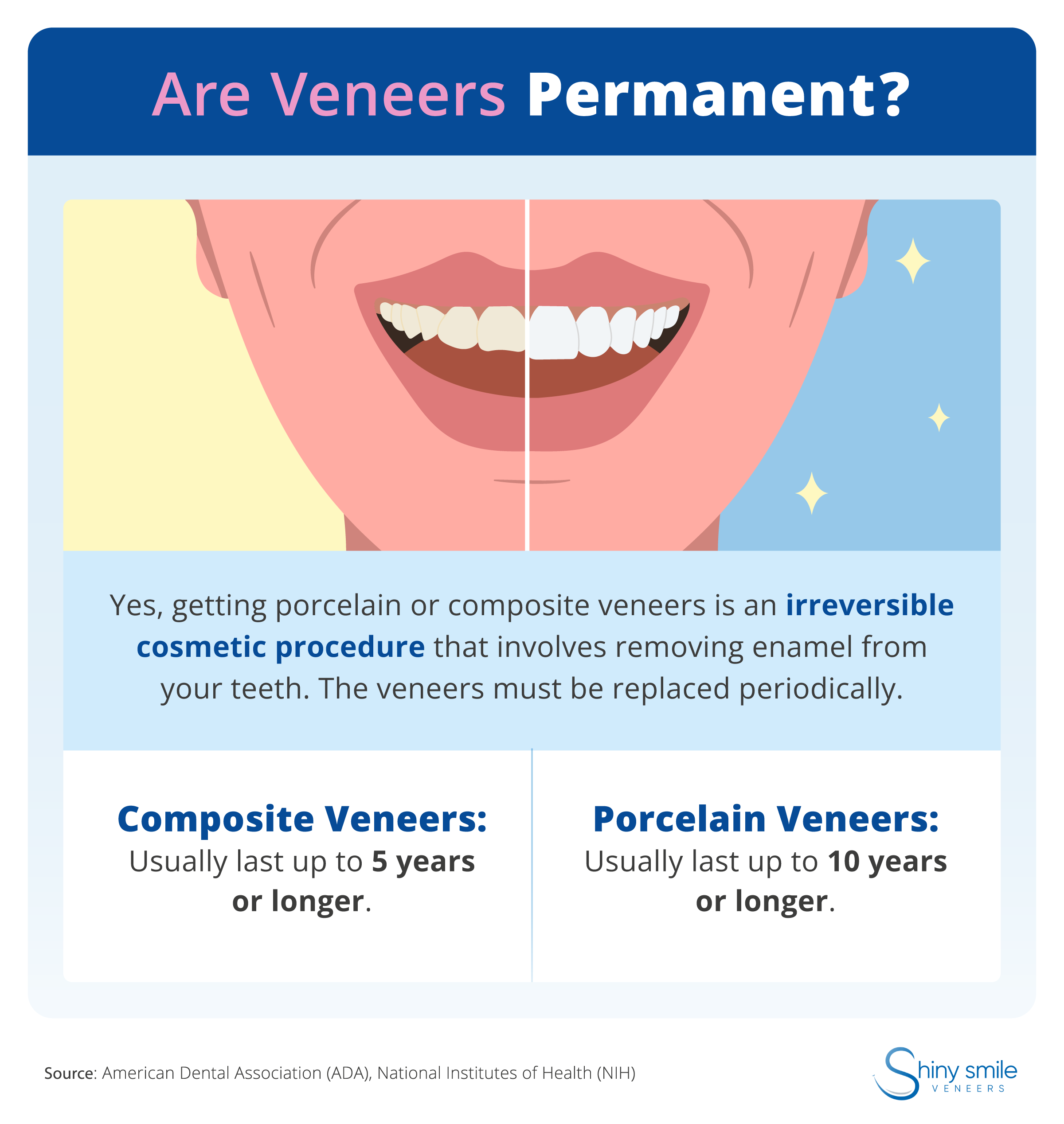
How Long Do Permanent Veneers Last?
The veneers themselves typically last between 5 to 20 years, depending on the material you choose.
If you’re looking for a long-term solution, porcelain veneers and composite veneers are your go-to. But if you want something removable, snap-on veneers are the way to go.
| Type of Veneer | Is It Permanent? | Longevity |
|---|---|---|
| Porcelain Veneers | Yes | 10-20 years |
| Composite Veneers | Yes | 5-7 years |
| Snap-On Veneers | No | Up to 5 years |
Types of Traditional Dental Veneers
1. Porcelain Veneers
Porcelain veneers are strong, durable, and offer a natural look that mimics real teeth. They’re great for anyone with serious dental issues like large gaps, worn enamel, or heavily stained teeth.
These veneers require grinding down your natural teeth and sending impressions to a lab, which can take time and cost around $925 to $2,500 per tooth.
But here’s the catch: once you get porcelain veneers, there’s no going back to your natural teeth. It’s a permanent solution.
2. Composite Veneers
Composite veneers are a more affordable alternative. They use a tooth-colored resin that can be applied in just one dental visit.
While the process is quicker and less invasive than porcelain, the downside is that composite veneers are more prone to staining and chipping.
These veneers range from $250 to $1,500 per tooth.
Frequently Asked Questions
What happens to the teeth under veneers?
Your natural teeth are filed down to make room for the veneer, which makes the procedure permanent.
Can you go back to normal teeth after veneers?
No, once you get veneers, you can’t reverse the process. Your natural teeth will always need a veneer or some other covering.
How long do permanent veneers last?
Porcelain veneers can last up to 20 years, while composite veneers usually last about 5 to 7 years.
What are veneers made of?
Veneers are typically made from either porcelain or composite resin, both of which are tooth-colored and designed to mimic the appearance of natural teeth.
Are veneers only for front teeth?
While veneers are most commonly used on front teeth, they can be placed on other teeth depending on your needs.
Conclusion
Traditional veneers offer a permanent solution, transforming your smile but requiring irreversible changes to your natural teeth.
With proper care, porcelain veneers can last up to 20 years, while composite veneers provide a more budget-friendly option but with a shorter lifespan.
If you’re not ready for a lifelong commitment, snap-on veneers are a flexible alternative that you can remove anytime. They give you the smile boost you want without the permanent alterations. Want to try the easy, non-permanent route? Shop Shiny Smile Veneers today and see how quickly you can transform your smile.