They can do wonders for your smile, but there’s a big catch: they permanently alter your natural teeth.
Once the enamel is shaved down, there’s no turning back.
It’s a major decision, so understanding the process and potential risks is key.
Let’s take a closer look at whether veneers are bad for your teeth and what you need to know before taking the plunge.
Key Notes
Veneers permanently alter your natural teeth by removing a layer of enamel.
They offer a long-lasting solution for a brighter, straighter smile.
Once applied, you can’t return to your original teeth.
Veneers require regular care just like real teeth to stay in good shape.
Are Veneers Bad for Your Teeth?
Veneers themselves are not bad for your teeth when applied correctly and maintained with good oral hygiene.
However, the process of applying traditional veneers involves removing a thin layer of enamel, which permanently changes your teeth. This means you can never go back to your original teeth once veneers are applied.
If applied by a skilled professional and cared for properly, veneers can last for years without causing harm.
On the other hand, poor application or neglect can lead to issues like tooth decay, sensitivity, and damage over time.
Why Veneers Aren’t Harmful When Done Correctly
Safe with proper care: Veneers do not inherently damage your teeth, but proper hygiene is essential to avoid decay under the veneers.
Long-lasting: Veneers, especially porcelain ones, can last 10–20 years if cared for correctly, making them a durable cosmetic solution.
Tooth sensitivity: While some experience sensitivity, this can usually be managed with proper oral care and products designed for sensitive teeth.
Are Traditional Veneers Irreversible?
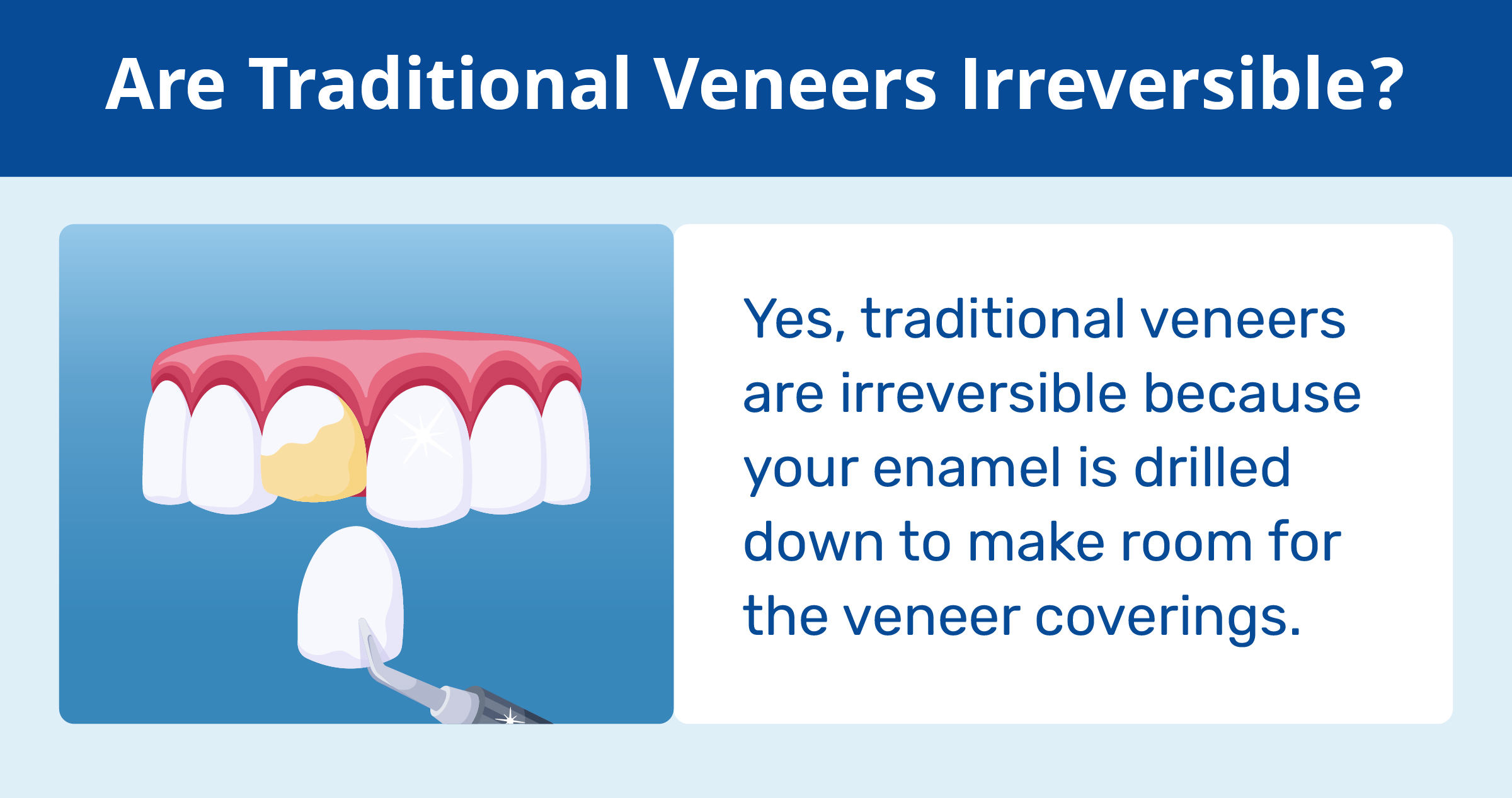
Yes, traditional veneers are irreversible.
The application process involves shaving down a thin layer of enamel to fit the veneers, and once that enamel is removed, it cannot be restored. This permanent change means you will always need veneers or some form of dental covering after the procedure.
Pros and Cons of Traditional Veneers
Traditional porcelain veneers are the gold standard for dental veneers.
But, like anything else, they have their advantages and disadvantages:
Pros
Natural appearance: Porcelain veneers look the most like real teeth, providing the most natural appearance of all the options.
Durable: They tend to last the longest, usually at least 10 years or more.
Stain resistant: Porcelain is naturally resistant to stains from food and drinks.
Customizable: You can choose how you want your veneers to look in terms of color, width, and shape. You also can get individual or partial veneers if you don’t need a full set.
Cons
Irreversible: The procedure involves shaving down your enamel, meaning you can’t return to your original teeth once you get traditional veneers installed.
Expensive: Porcelain veneers are very expensive, costing anywhere from $925 to $2,500 per tooth.
Maintenance: In addition to standard oral hygiene, you may need to take extra care to maintain your veneers, such as avoiding hard or sticky foods that can damage them.
Installation prep: It takes multiple dentist visits, including imaging, drilling down your teeth, waiting for your veneers to be made, and actually getting them installed to get permanent veneers put in.
Permanent vs. Temporary Veneers
If you’re hesitant about the permanent nature of traditional veneers, temporary options like snap-on veneers might be more suitable.
These don’t involve enamel removal and can be removed whenever you like.
Permanent Veneers
Snap-On Veneers
Longevity
5+ years
1-5 years
Affordability
$250 to $2,500 per tooth
$370 for a single arch or $570 for a top and bottom set of Shiny Smile Veneers
Installation Process
Multiple dentist visits
No dentist visits
Permanency
Cannot be removed
Can be removed
The main difference is that, unlike traditional veneers, temporary veneers are reversible — simply snap them on when you want them on, and snap them off when you want to go back to your original teeth.
Here are some other key ways temporary veneers differ from permanent ones:
Don’t require drilling of your teeth enamel
Won’t last as long
More affordable
Installation process is easier
Don’t require as much maintenance
Looking For A New Smile Without The Commitment?
Snap-on veneers give you a flawless look—no drills, no dentist visits.
When applied by a skilled dentist, the process of getting veneers is safe.
However, since the procedure permanently alters your teeth by removing enamel, proper care and regular dental check-ups are crucial to prevent any long-term issues, such as decay or damage to the underlying teeth.
Frequently Asked Questions
How long do veneers typically last?
Veneers can last anywhere from 10 to 20 years with proper care and maintenance.
Do veneers ruin your teeth?
Veneers don’t ruin your teeth, but traditional veneers require removing a thin layer of enamel, making the process irreversible. With proper care and hygiene, veneers won’t cause significant oral health issues. Porcelain veneers last 10+ years, while composite veneers last around 5 years.
Do veneers stain like natural teeth?
Porcelain veneers are highly stain-resistant, but poor oral habits can lead to discoloration over time.
Conclusion
Veneers are a great option for improving your smile, but traditional ones come with a permanent change—your enamel is removed, and there’s no reversing the process.
While they deliver stunning, long-lasting results, they require careful consideration.
If you’re not ready for that commitment, snap-on veneers offer a non-invasive, removable alternative. They give you the same bright, flawless look without altering your natural teeth. For a flexible and affordable solution, snap-on veneers might be just what you need.Ready for a new smile? Shop Shiny Smile Veneers today.